Hello! This is
Jonathan de Belle
I am a Programmer and a Problem Solver
The world we live in is becoming increasingly complex. In order to keep up, we need to simultaneously specialize within our respective fields while maintaining a multidisciplinary understanding of the problems we cross. I embrace this by constantly keeping myself familiar with various hardware and software technologies that can be elegantly combined to solve contemporary problems.
Download CV

A few projects

Throughout the years, I've crossed paths with amazing people and, with them, designed and built some pretty cool stuff! Below, you will find some of the projects I've proudly contributed to.
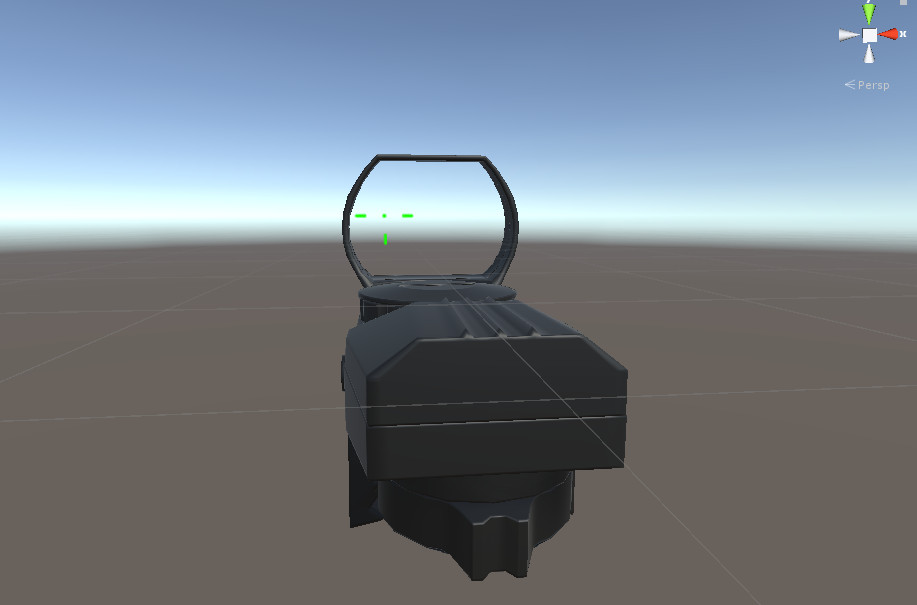
Unity Shader Tutorial
solo project, shader design, video editing
Having had some experience with location based VR (LBVR), I thought I would share some of the knowledge I had about making easy-to-use sights.
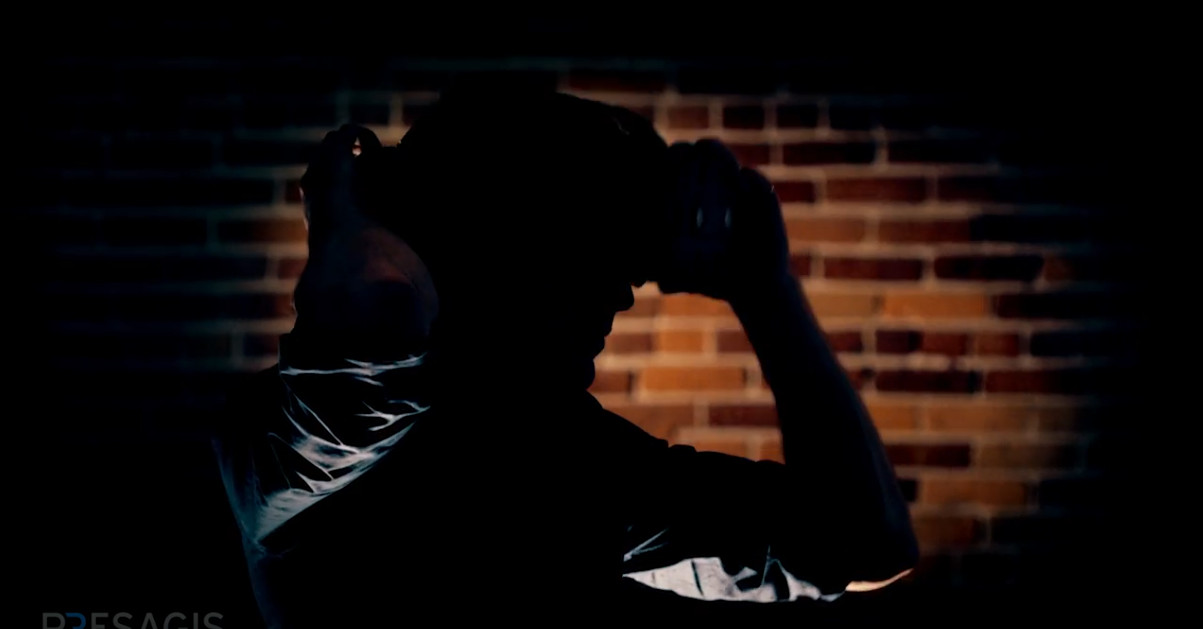
Immersive Trainer
team lead, shader design, netcode, programing, behavioural AI
For I/ITSEC 2018, my team and I collaborated with Presagis to bring together a proof-of-concept for an immersive infantry trainer.
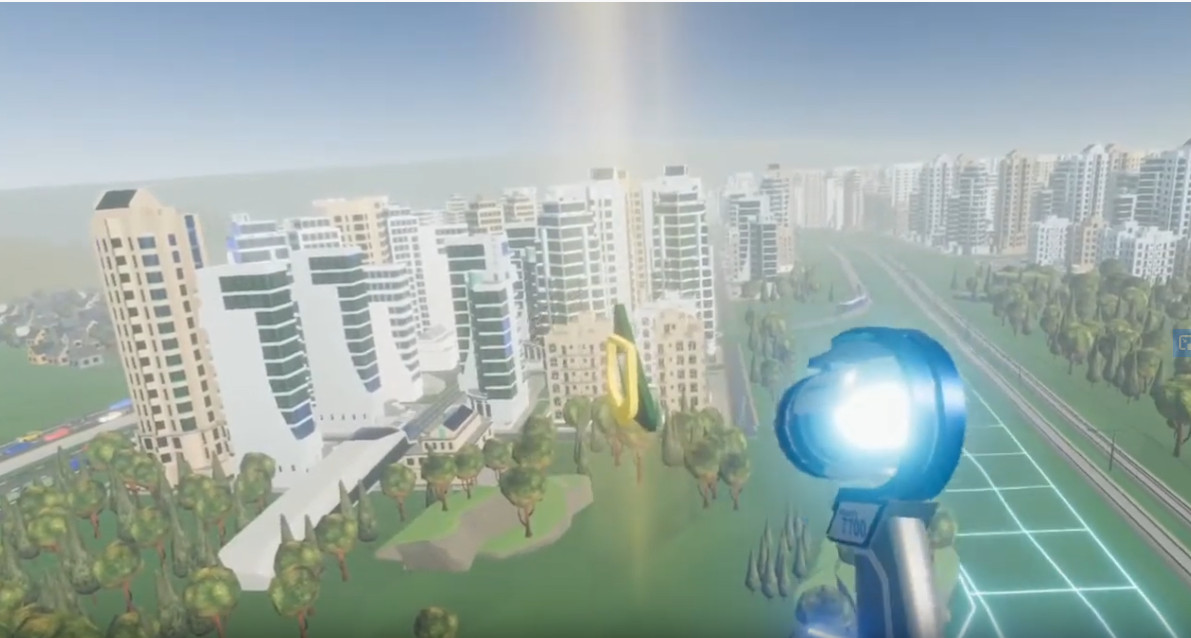
Bombardier Activation
team lead, basic procedural city generation, shaders
How do you show your audience the impact that Bombardier could have on the local economy? You build a 1:20 scale virtual city, you have them get on Aperium's VR treadmill and you let them to see it for themselves!
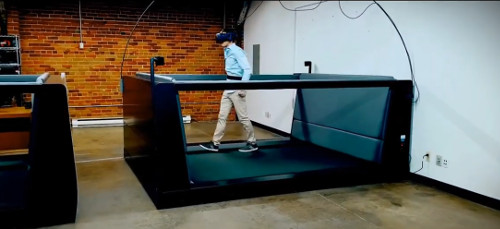
K-01 vODT
redirected walking algorithms, speed control algorithms, Unity editor tools, Unity driver integration
As one of the founders of Aperium, I spent a lot of time developing the company's flag-ship product, a fully immersive VR locomotion solution.
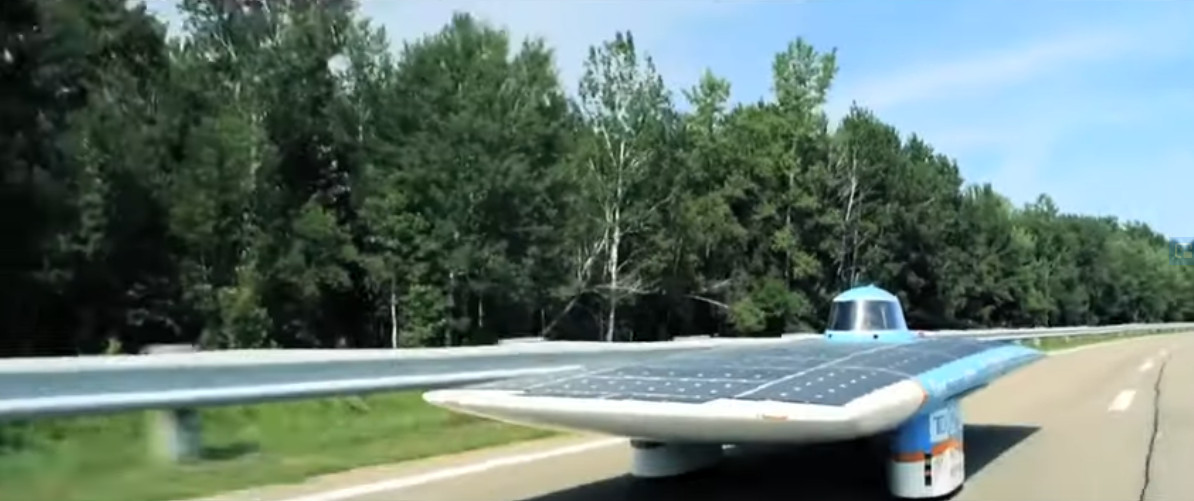
Esteban VII
electrical director, firmware, CAN-bus drivers, battery management system, on-board lcd
Esteban is a solar car that was built to compete in the American Solar Challenge. As electrical lead, I got to work with an amazing team to build a solar powered vehicle with a top speed of 110km/h and unlimited autonomy!
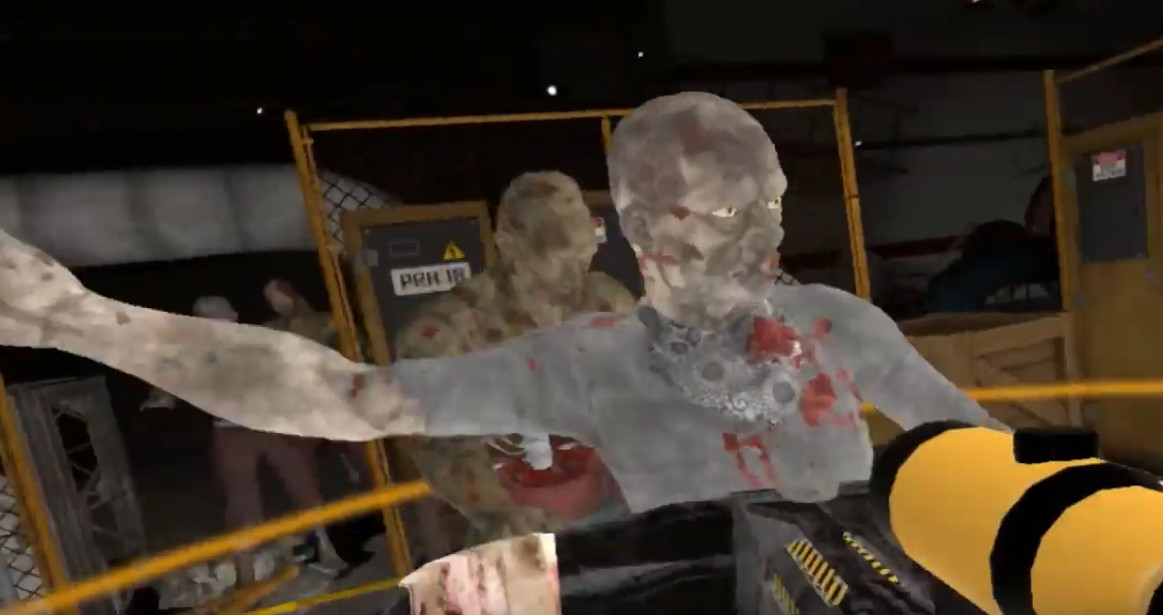
Dead End VR
team lead, shaders, netcode
Dead End is a 25-minute LBVR experience that takes you through the zombie apocalypse. Armed with only a crossbow, do you have what it takes to survive the outbreak?
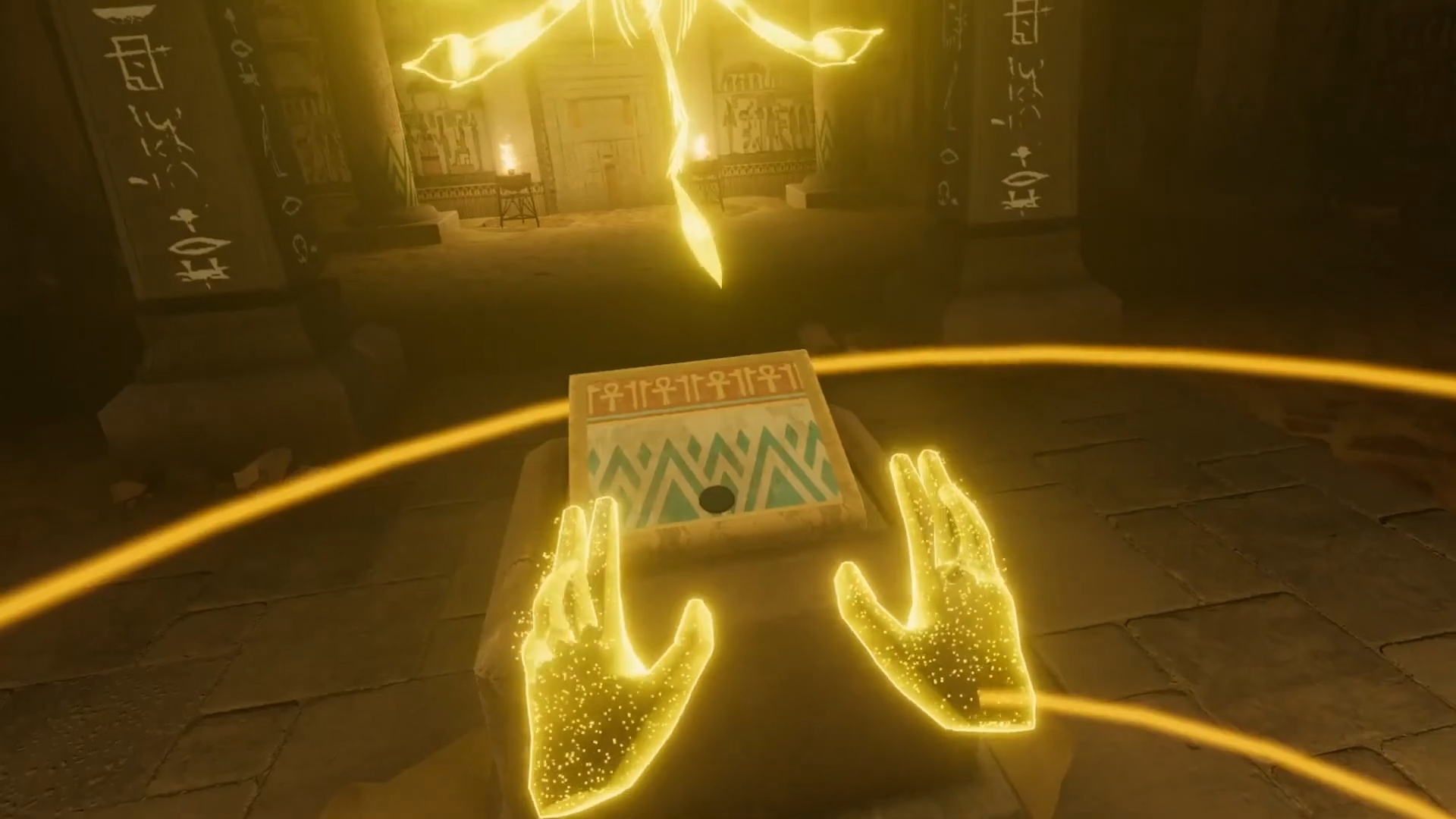
Enter the Duat
hand tracking, shaders
This was a collaborative project between Aperium and Phenomena which included the integration of haptic hardware, hand tracking as well as the K-01 VR Treadmill.

My Skills

I believe it is important to have skills that span across multiple fields. This way it is possible to attack problems from a variety of different angles. Of course, there's a balance to be had! If we touched everything we could get our hands on, we would never become proficient at any of them. Here are the various tool-sets that powered my career, I have divided them into two categories:

Technical Skill Set
Rendering
I love physics, math, programming and low-level hardware. Rendering technologies bring all of these together to simulate light. On a very specialized piece of hardware I've built custom shaders in HLSL, GLSL and Cycles to generate a variety of technical effects.
Low-Level Software
This is where my nerdy side comes out. I love to play where hardware meets software. From optimizing gcc-C's compilation by manually filling in some Assembly, writing IL op- codes to accelerate serialization or simply establishing a link with a USB connected device, it's always a challenge, but one I take head-on.
Game Development
Games are so much more than just a form of entertainment. They also have an unbelievable potential to teach and inform in an unprecedented manner!. Unity, it's C# API and HLSL shaders powered many of my team's projects as we developed awesome LBVR content.
Networking
Networking, especially for interactive content, is a huge challenge! There are so many constraints to deal with. The key is a solid architecture that takes into account the desired result to balance out latency, QOS, compression and synchronicity, to name only a few! Truth be told, it's easier said than done.
Web Development
Because we live in a connected world, it is hard not to delve into one web technology or another. I've been lucky enough to work with NodeJS/Apache, MySQL/sqlite, HTML/JS/CSS to power various interactive projects and websites.
Hardware Development
Without hardware to run on, software serves no purpose. Kicad and Altium have powered some of my designs along-side some local CM's with my trusty soldering as a backup in case of rework and quick prototyping.
Product Management
Market Validation
Everyone knows that technological risk needs to be mitigated but market risk is no different. Markets are finicky, they can be difficult to understand and many elements are completely outside of our control. It's possible to debug a piece of hardware or software overnight. The same can't be said about market fit.
Quick-turn MVP
It's important to understand the minimum feature set that the user will need in order to start using a product. This understanding allows you to keep the scope of the MVP small for the fastest possible development iteration.
Agile Methodology
The Agile Methodology is a beautiful thing but it can also be detrimental if applied blindly. Knowing when, how, and when not to apply it, is important.
Mocking-Up
The fastest way to validate a product is to mock it up and put it in your client's hands. There are many ways of creating a mock up, from a concise description, a render or to a 3D print. Understanding how to do it quickly and in a way that will be understood by the user is the key to being successful.
Math
Math is just one of these things that I can't live without. It solves problems that would otherwise be impossible to solve, it provides insight on the way things work and it's the only ground truth that we can consistently rely on. Math is usually the pillar I lean on to resolve complex problems.
Artificial Intelligence
Machine learning is now part of the world we live in. There are grand applications, such as natural language understanding, and there are applications that we take for granted, such as putting a mustache on your friends in your favorite social media app. Every time I play with Tensorflow, I'm amazed by how trivial it can make some otherwise very difficult programming problems.
Music
I've been in contact with music since a very young age. I've played the piano, DJ'ed and designed basic additive synthesizers in my spare time. In fact, building and designing analog amplifiers is what got me into engineering in the first place! More recently, this has transposed itself into giving me an understanding of sound spacialization in modern video games and VR content.
Media & Gaming
Working close to the video game industry for the past 3 years, I really enjoy looking at the work that others are doing. From low budget VFX to indie video games all the way to AAA studio content, I'm constantly amazed by the creativity that is consistently pushed into the latest rendering technologies.
Miscellanious Technologies
I can't help but tinker around with various technologies to keep up to date and be familiar with the past. The short list of stuff I've played with is ThreeJS, Irrlicht, ShaderToy, VHDL, Unreal, Visual Basic, PUG, OpenCV, VirtualBox, Linux (Arch, Debian, Ubuntu, CentOS, Raspbian, XBMC), Matlab/Octave, AWS, Wordpress, etc. I even have a small collection of slide rules I like to use in place of my calculator from time to time.

My Timeline

Genetics and past experiences make up who we are. Genetics, we have no control over but, luckily, we get to choose which path we walk, at least to some degree! Here is a brief timeline that describes who I am and where I come from.
Collège Gérald-Godin - Electronics
Sept 2008 - May 2011
During my high-school years, I had developped an interest for programming and basic digital circuitry. I knew I wanted to get into electronics and so I did. During these years, I studied in electronics and developped a heavy interest for analogue circuit design as well as embedded software.
MPB Communications
December 2009 - December 2011
At MPB Communications I discovered the wonderful world of optics. I learned how to assemble optical amplifiers and learnt some of the basic theory behind it. It's also here that I was confronted to quality standards and participated in improving production processes accordingly.
Esteban VI
Sept 2011 - July 2012
Esteban is a solar car built by students at Polytechnique de Montreal. Being the first to don a full carbon-fiber construction and a completely redesigned electrical system, it came with it's down-falls, causing us to complete the American Solar Challenge in nearly last position. Mistakes were made, some of which were my own, but these were layed the foundation for the next generation: Esteban VII.
Bombardier Transportation
May 2013 - September 2013
Working at Bombardier was an eye opener. It got me to understand how much of a feat it is to produce some of the incredible machines that millions of people rely on for their daily commute. Some of the theory I had learned in the past still applied, just at a much larger scale. The thermal dynamics I managed on audio amplifiers turned from Watts to MegaWatts.
Esteban VII
July 2012 - July 2014
Everyone loves a second chance, and that's exactly what this was, for almost the entire team. Having built and raced Esteban VI with marginal success, almost every member of the team wanted to improve on the design to build Esteban VII, which would turn out to be the highest performing canadian solar car to compete in the American Solar Challenge's history. I was lucky enough to be the team's electrical director and working with one of the most competent individuals I've come to know, without pay, and for the simple love of engineering.
Chargé de Laboratoire
September 2014 - July 2015
In my last year studying at Polytechnique de Montreal, I was offered the opportunity to organize the labs for the program's embedded software course. As much as my job was to teach how to program on the ARM Cortex-M architecture, it's needless to say I learned a tremendous amount myself.
Polytechnique Montreal
September 2011 - May 2015
I graduated from Polytechnique de Montreal with a specialization in mathematics after a wonderful 4 years of study. These years were spent furthering my understanding of electronics and embedded software, discovering a strong interest for math and, most importantly, meeting and interacting with a brilliant group of fellow graduates who would help shape the world of tomorrow.
Playing with OpenCV
May 2015 - September 2015
After graduating and no longer spending sleepless nights on solar cars, I needed another hobby to fill in the time. I picked up OpenCV and Irrlicht to develop a number of small proof-of-concepts to better understand the possibilities and limitations of computer vision. From controlling my mouse with my hands to building a perspective aware virtual environment, I gained an intuition of how to solve simple CV problems.
Thought Technology
December 2013 - December 2016
I started off at Thought Technology as an intern and, upon graduating, I became technical lead for a line of biopotential encoders. With an amazing team, we developped the hardware and software required to simultaneously record and stream multiple EEG, EMG and ECG signals for a variety of biofeedback applications.
Aperium
January 2017 - Today
Having developped a strong interest for virtual reality, I co-founded a business originally dedicated to solving virtual reality's locomotion problem by building a seemless virtual reality treadmill. Given that our technology ended up mostly being utilized for event marketing, we generalized our business model to meet the market's demand for custom interactive hardware and software.
Networked Entity Component System
January 2019 - May 2019
Having built a few multiplayer experiences for Aperium and having been in contact with Unity's ECS, I worked on building and ECS that naturally serializes component states. This synchronous network framework is fundamentally server authoritative with syntax allowing clients to obtain predictive leneancy for any systems that require instant client-side response. We use this framework at Aperium to cut down development of multi-instance experiences.

Self-Reflexion

It's important to stop for a second and try to define one-self. If I were to lend myself to the exercise, I would define myself as a problem solver. It doesn't matter what the problem is and what field it stems from, everyone can contribute a solution. Even by only contributing partial solutions, others can build upon it and make a world of a difference!
Let's build something together
I may or may not know you, but now you know a little something about me. Do you see something great that we could do together? Don't hesitate to throw me a line. I love meeting new people and exploring new opportunities!
Contact Me